Fully sealed clean crawlspace encapsulation in Somerset KY

From Flooded to Fully Sealed: Somerset, KY Crawlspace Rescue

Job Snapshot

Somerset, KY (Pulaski County)

Water mitigation, mold remediation, crawlspace encapsulation

Inspected: July 23, 2026 · Completed: September 23, 2026

At least a foot of standing water had been sitting in the crawlspace; wood moisture near 15% on the main beam.

Mold remediation, insulation removal, doubled strip drain with gravel backfill, two sump pumps, full encapsulation, dehumidifier.

[Custom Engineered Crawlspace Solution - Request Free Estimate]

[Relative Humidity stabilized <50%; Wood Moisture reduced <12%]

Interactive Before & After Comparison

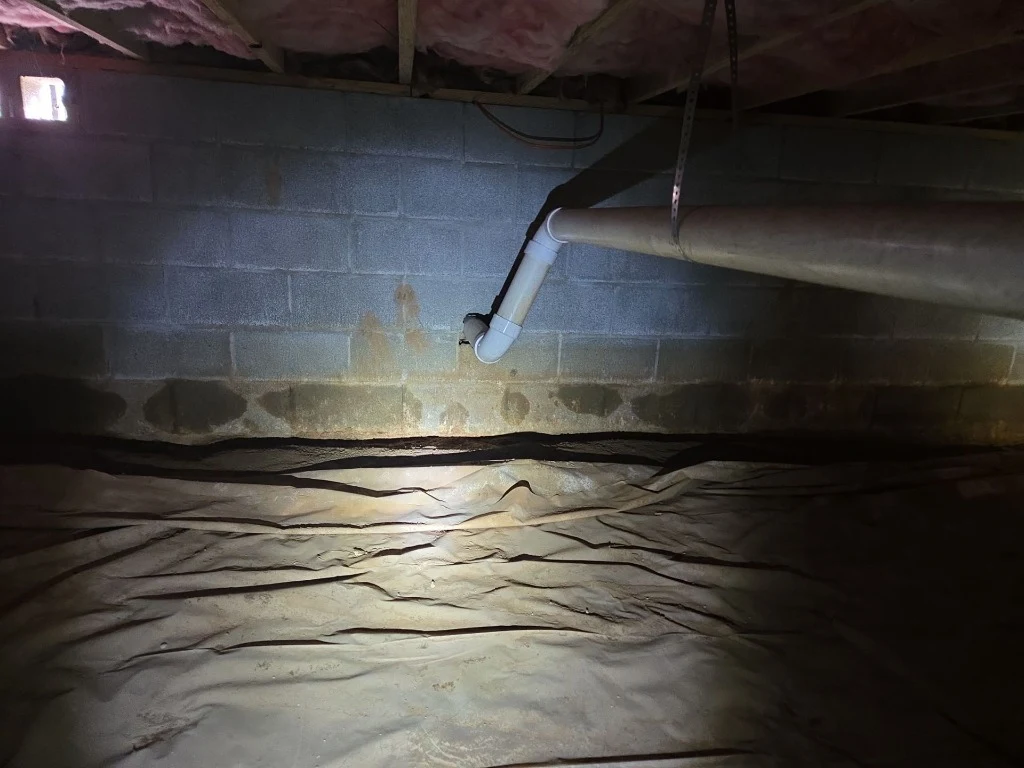
Somerset KY crawlspace before repair showing moisture staining, waterline, and dirty plastic
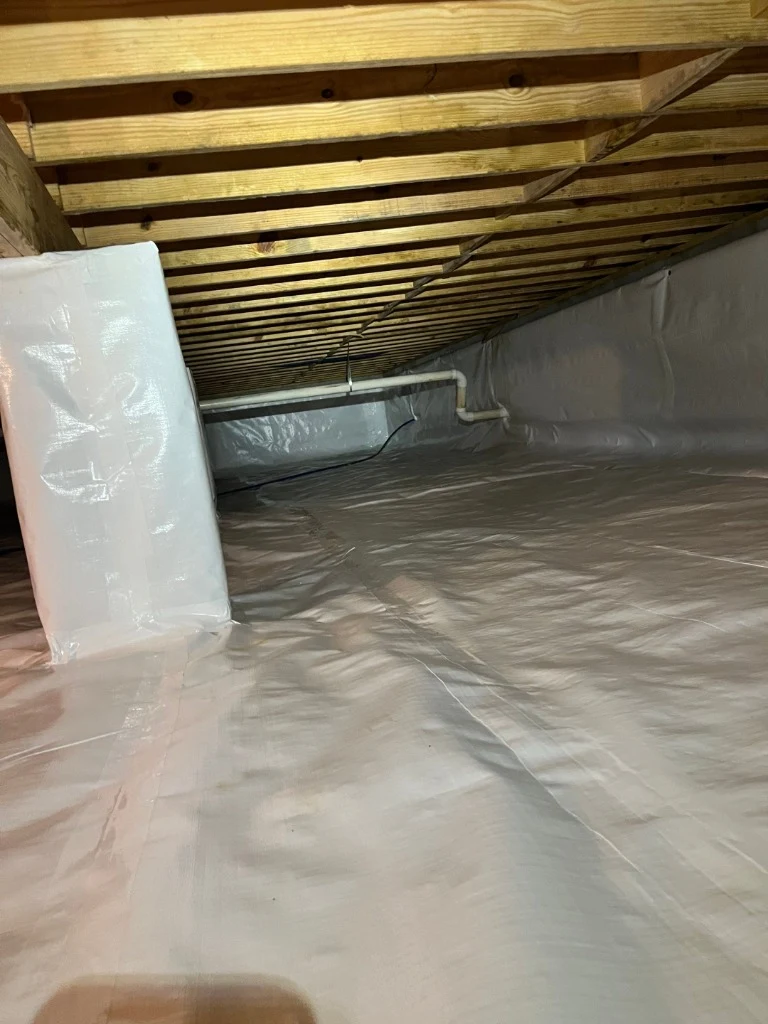
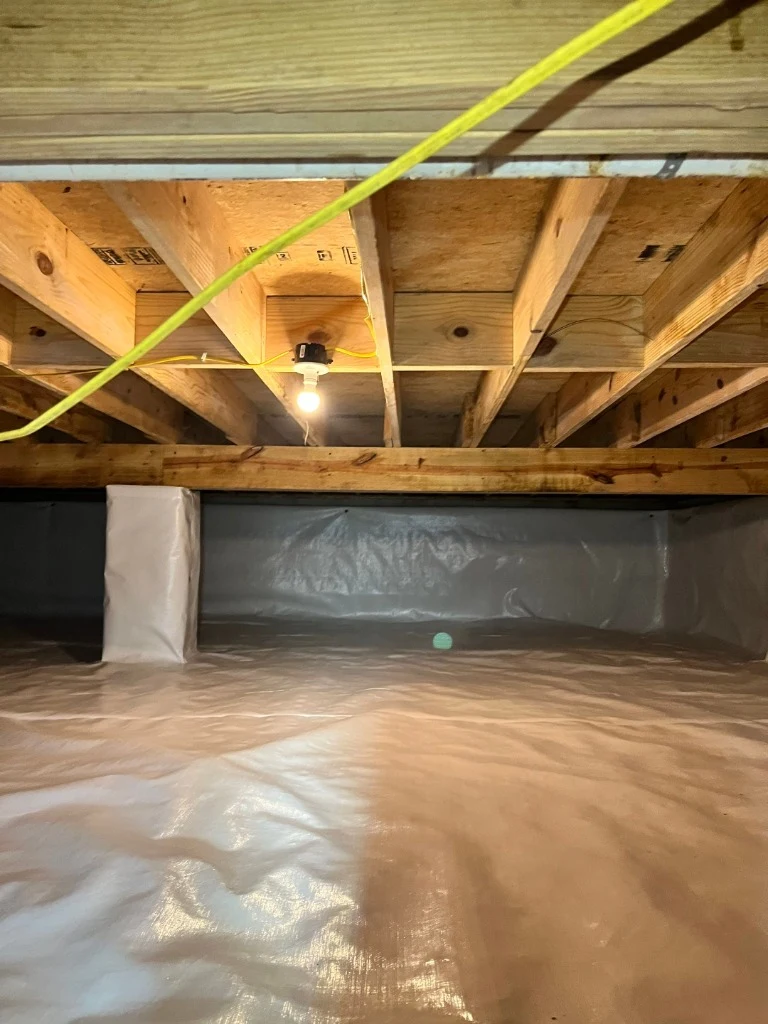
Somerset KY crawlspace after encapsulation showing sealed white vapor barrier and wrapped piers
↔
Risk Level: High

What was going on in this Somerset crawlspace?

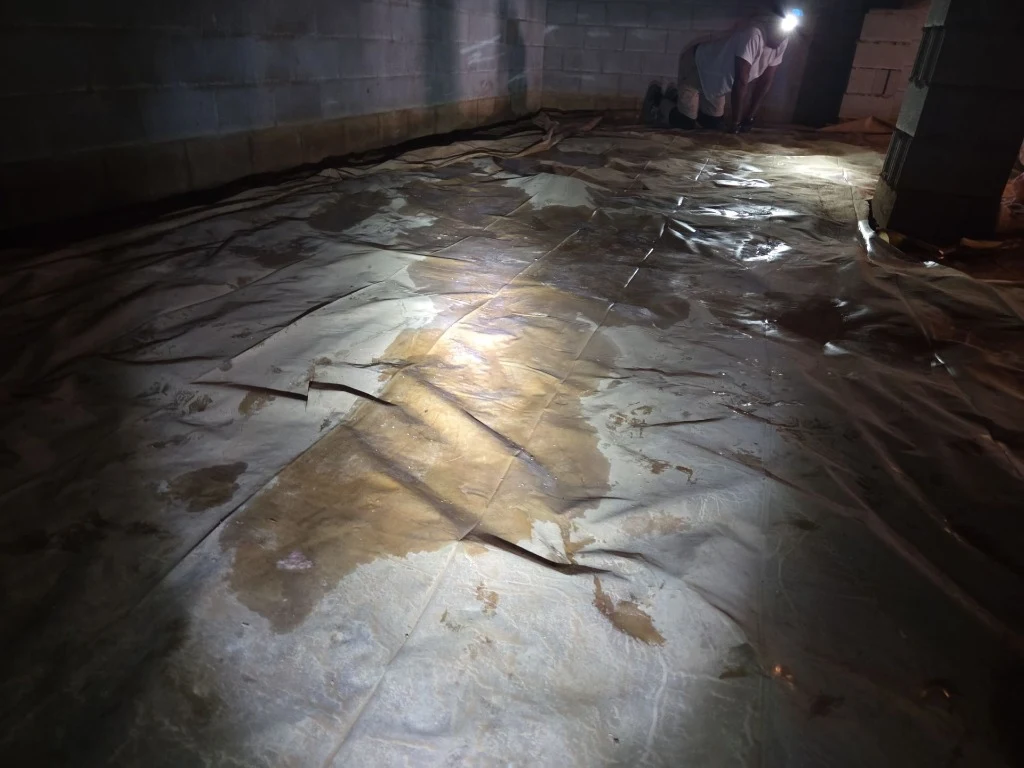
When our inspector opened the crawlspace door tucked under the back deck, the space was severely flooded with clear waterlines showing over a foot of standing water had been sitting in the structure.

Water was actively pooling on top of the old plastic vapor barrier, creating a stagnant reservoir underneath the home. The structural support piers were showing early signs of sinking due to prolonged ground saturation, and an unsealed open hole through the exterior block wall was letting daylight (and moisture) straight in from outside. An exhaust fan had been installed by a previous contractor at some point, but it was completely ineffective at keeping up with the heavy volume of water intruding through the foundation walls.
Where was the water coming from?

This Somerset home was taking on water from almost every exterior direction due to poor surface drainage and inadequate water management systems.

  • Steep Yard Slope: The front yard is graded steeply straight back toward the house, causing heavy rainwater runoff to rush directly into the foundation perimeter.
  • Overshooting Gutters: The roof features a large surface area with a steep pitch, causing standard 5-inch gutters to overflow during intense rainfall.
  • Buried Downspout Failures: A critical downspout was buried into corrugated pipe with no visible discharge outlet, offering no guarantee that roof runoff was being safely diverted away from the foundation.
  • Side Yard Soil Erosion: Visible water channels and soil erosion along the side of the home indicated heavy surface pooling (and potential pest intrusion pathways).
  • Unflashed Deck Ledger Line: The uncovered back deck showed no visible flashing where it attached to the brick exterior.

The heaviest water intrusion entered along the right side wall and front entrance foundation wall. Inside the crawlspace, gravity drained all that water directly to the lowest elevation on the garage side, where standing water was actively pooled during our initial site inspection.

What did the inspection find?

Our senior inspector conducted a full 27-point moisture and structural evaluation, uncovering several critical vulnerabilities that required immediate intervention.

  • Elevated Wood Moisture: Wood moisture readings of nearly 15% were recorded on the main support beam near the front wall—a level far above safe structural limits for crawlspace framing lumber.
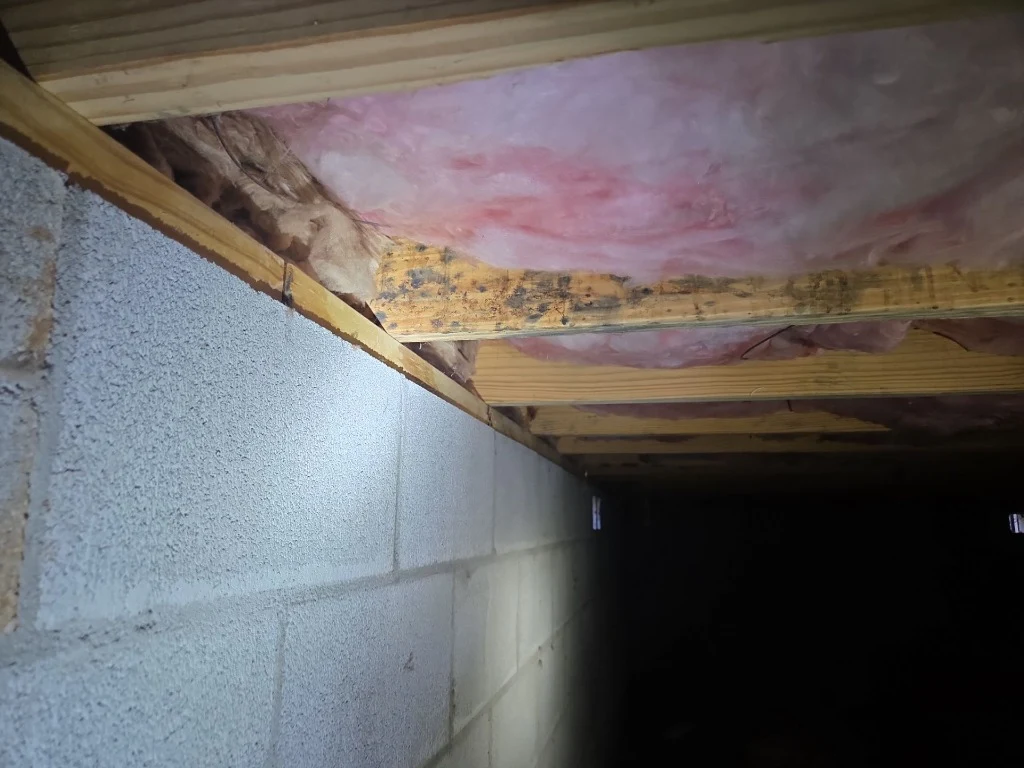
  • Active Mold Colonization: Surface mold growth was present along the main beam and scattered across floor joists that had been missed during a previous superficial cleaning.
  • Settling Concrete Support Piers: Sinking pier blocks caused by long-term soil saturation and loss of load-bearing soil capacity.
  • Unsealed Wall Penetrations: An open block hole extending through the exterior foundation directly to the outside grade.
  • Water-Logged Fiberglass Insulation: Existing subfloor insulation had absorbed standing water, sagging and creating an ideal environment for wood rot.

How did we fix it?

Our engineering team designed and executed a total 7-step remediation, drainage, and clean-room encapsulation system.

  1. Mold Remediation: Treated all affected floor joists and the main structural beam using our proprietary BIOShield™ anti-microbial process to eliminate active mold spores and protect against future regrowth.
  2. Insulation Removal: Stripped out and disposed of all old, contaminated fiberglass insulation that was holding trapped moisture against the subfloor.
  3. Interior Drainage & Gravel Backfill: Excavated a perimeter trench backfilled with clean drainage stone along problem exterior walls. Installed a doubled strip drain in front of support pillars, laid in straight runs to maximize water flow velocity back to the pump basins. Extra leach lines were added across the center of the crawlspace floor (learn more about our water mitigation).
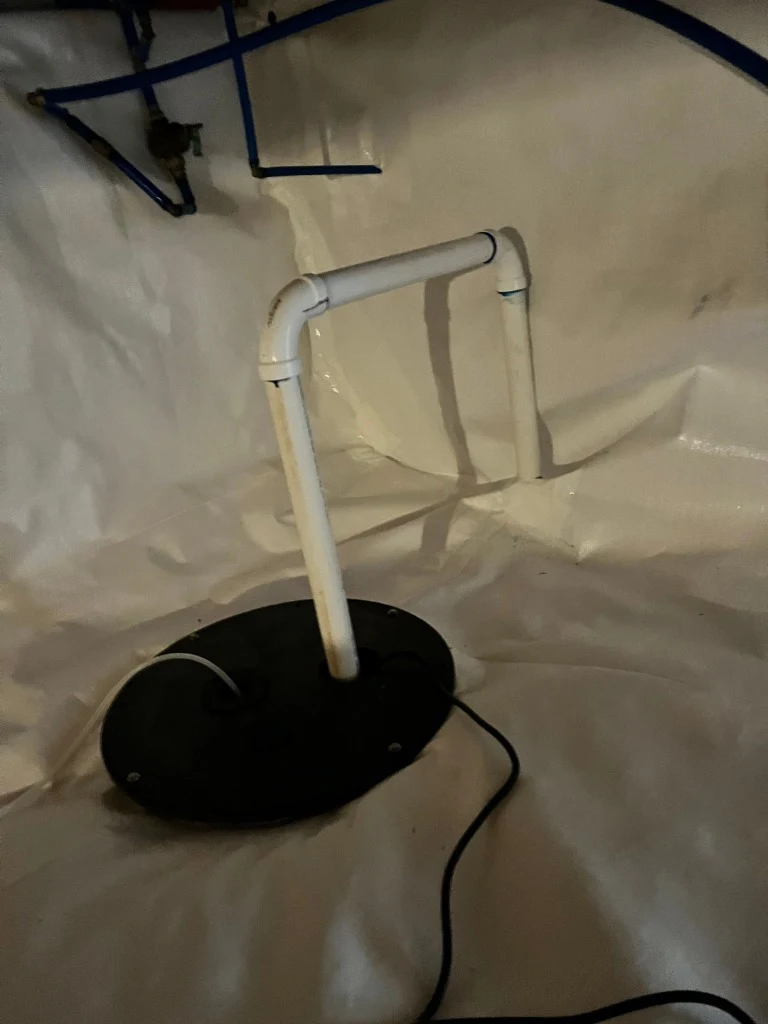
  4. Dual Sump Pump Installation: Placed two heavy-duty sump pumps—including one at the natural low point on the garage side—to ensure reliable water removal and system redundancy for high water volume.
  5. Sealing Foundation Penetrations: Fully sealed the open exterior block wall hole with high-density masonry repair mortar.
  6. Full Crawlspace Encapsulation: Installed a heavy-duty medical-grade sealed vapor barrier lining the entire floor, running up all foundation walls and wrapped tightly around support piers (explore encapsulation benefits).
  7. Commercial Dehumidifier & Drying Rig: Deployed a high-efficiency crawlspace dehumidifier coupled with industrial air movers to dry structural framing down to safe equilibrium levels.

What did the crawlspace look like after?

The completed project transformed a hazardous, flooded pit into a bright, surgical-grade sealed room that protects the home's air quality and structural integrity.

Grimey crawlspace with waterline and unsealed dirt floor before remediation
BEFORE: Unsealed Grimey Crawlspace & Waterline
Fully encapsulated crawlspace wrapped with clean white plastic vapor barrier
AFTER: Fully Encapsulated White Vapor Barrier
Standing water pooled on old vapor barrier during Somerset KY inspection
BEFORE: Standing Water on Vapor Barrier
Clean encapsulated crawlspace with white vapor barrier and illuminated framing in Somerset KY
AFTER: Encapsulated Floor & Clean Framing
Surface mold growth on subfloor framing joists along foundation wall
BEFORE: Mold Growth on Floor Joists
Airtight sealed sump pump basin and looped discharge pipe installed in sealed crawlspace
AFTER: Sealed Sump Basin & Discharge Line

Measured Post-Job Verification:

Following full encapsulation and drying equipment operation, crawlspace Relative Humidity dropped from over 85% down to a stable 47%. Wood moisture readings across all structural floor joists dropped from nearly 15% to below 11%, permanently halting mold growth.

Outside fixes we'd recommend for a home like this

While interior drainage and sump pumps manage water that enters the crawlspace, fixing exterior surface water reduces how much pressure reaches your foundation walls.

For homes facing steep front grading or heavy roof runoff like this Somerset property, we recommend:

  • Upgrading to 6-inch seamless gutters with oversized downspouts to handle heavy downpours without overshooting.
  • Extending downspout discharge lines via solid PVC pipe at least 10–15 feet away from the foundation wall with daylight outlets.
  • Regrading soil adjacent to foundation walls to ensure a continuous negative slope away from the house.

Be sure to ask your inspector about exterior drainage recommendations during your free 27-point inspection.

Frequently Asked Questions

How do I know if my crawlspace is flooding?
Look for a clear waterline on your foundation walls, standing water pooled on top of plastic sheeting, strong musty odors in living areas above, or damp, darkened framing lumber.
Why would a house need two sump pumps?
Large crawlspaces, or homes that take on heavy water intrusion from multiple sides, often require two pumps so water doesn't have to travel extreme distances across the floor. Dual pumps also provide critical backup protection during torrential rain storms.
Is 15% wood moisture a problem?
Our inspector flagged 15% as elevated and dangerous for a crawlspace environment. Sustained moisture in framing above 15% feeds mold spores and leads to wood rot, so we treat 15%+ as an urgent warning sign.
Can you fix a crawlspace that's already been cleaned and still has mold?
Yes. In this Somerset home, we discovered mold spots that had been missed during a previous cleaning attempt. Our BIOShield™ process eradicates deep-rooted mold spores and leaves a protective microbial shield.

Seeing water or mold under your home?

Book a zero-obligation 27-point crawlspace inspection or talk to our live support team right now.

Book Free Inspection Chat With Us Live

Explore More Case Studies

Kentucky Crawlspace Inspection
Central KY

More Jobs Coming Soon

We post weekly video walkthroughs of real Kentucky jobs on YouTube.

Watch on YouTube →
Chat With Us